



ABOUT US
INCLUDING PRODUCTS SUCH AS RESIDENTIAL ENERGY STORAGE,
C&I ENERGY STORAGE, AND MARINE ENERGY STORAGE.
C&I ENERGY STORAGE, AND MARINE ENERGY STORAGE.
0+
Founded in 2018
0+
Global Service Countries
0%
R&D Investment Ratio
0
Global Branches
With the light of technology, create a beautiful future.
Litai Energy – The Most Trustworthy System Solution Integrator
Positioning
To Make Energy Cleaner
and Life More Convenient
Mission
To Build Litai Energy into the World’s Preferred Partner for New Energy
Vision

BRAND STRENGTH

0+
Global Service Countries

0%
R&D Investment Ratio

0
Global Branches

CERTIFIED
Full Coverage

~0%
R&D personnel

0+
Patent application

0
Cooperative distributors

0+
Employees
As of December 5, 2025
LATEST NEWS

THE UK IS ABOUT TO MANDATE SOLAR PANELSON NEWHOMES – HERE’S WHAT IT MEANS
The UK government is moving toward one of its biggest housing-energy reforms in decades: making solar panels standard on most new-build homes. Under the upcoming Future Homes Standard, the vast majority of new homes in England are expected to include rooftop solar panels, alongside low-carbon heating systems such as heat pumps. The policy is part of Britain’s broader push to reduce energy bills, cut emissions, and reduce dependence on fossil fuels. Solar Panels Could Become Standard on New Homes The government has confirmed that new rules tied to the Future Homes Standard will require most newly built homes to generate renewable electricity — and in most cases, that means solar panels. Reports suggest developers may need to install rooftop solar covering around 40% of a building’s ground-floor area, although exceptions will exist for homes with unsuitable roofs or excessive shading. The policy is expected to take effect from 2027 or 2028, depending on the final implementation schedule. Why the UK Is Doing This The government says the move is designed to: Energy Secretary Ed Miliband described the shift as part of the UK’s effort to achieve “energy sovereignty” through clean domestic power generation. Officials estimate that future homes built under the new standard could save households up to £830 annually on energy costs compared with older housing standards. A Big Change for UK Housing Developers For builders, the new rules represent a major design and construction shift. Developers will need to rethink: Industry groups have warned that the requirements could increase construction costs by several thousand pounds per home. Some estimates place the additional cost at roughly £10,000 when combining solar panels and heat pumps. However, supporters argue that lower long-term energy bills will outweigh the upfront costs. Britain Is Moving Toward Fully Electrified Homes The solar-panel mandate is part of a much larger transition underway in the UK housing sector. Future homes are increasingly expected to include: In effect, homes are being redesigned as small-scale energy hubs rather than purely energy-consuming buildings. Even the UK Is Going All-In on Solar One reason the policy has attracted international attention is simple: Britain is not exactly famous for sunny weather. Yet solar power now contributes a growing share of UK electricity generation, reaching record output levels in 2026. That reflects a broader reality across Europe: Solar energy has become cheap enough that governments increasingly see it not just as climate policy, but as economic policy. The UK’s upcoming housing rules may become a model that other countries eventually follow.05/14/2026
EXTREME HEAT MAKES PERSONAL POWERRESERVES A MUST IN SOUTHEAST ASIA
As extreme heat intensifies across Southeast Asia, personal backup power systems are rapidly shifting from luxury gadgets to everyday essentials. Record-breaking temperatures, rising electricity demand, and increasingly unstable power grids are driving households across the region to invest in portable power stations, home batteries, and solar-charging systems. What was once considered emergency equipment is becoming part of normal urban living. Southeast Asia Is Getting Hotter — Fast In recent years, countries across Southeast Asia have experienced repeated heatwaves, with temperatures in parts of Thailand, Vietnam, the Philippines, and Malaysia climbing above 40°C. Singapore has also recorded some of its warmest years on record. Scientists warn that climate change is making extreme heat events more frequent, longer-lasting, and more dangerous. (worldweatherattribution.org) The impact is not just physical discomfort. Heatwaves place enormous pressure on national power grids as millions of households turn on air conditioning simultaneously. Rising Energy Demand Is Straining Power Grids Electricity consumption across Southeast Asia has surged alongside urbanization and rising temperatures. According to the International Energy Agency, cooling demand is expected to become one of the largest drivers of electricity growth in the region over the next decade. (iea.org) This creates a dangerous cycle: In several countries, rolling outages and localized grid instability have already become more common during heatwaves. Portable Power Stations Are Becoming Mainstream As a result, consumers are increasingly purchasing: Brands such as EcoFlow, Jackery, and Anker have seen growing demand across Asia for residential backup energy products. Unlike traditional fuel generators, modern battery systems are quieter, safer indoors, and compatible with rooftop solar charging. For apartment residents in dense cities like Singapore, Bangkok, and Manila, compact battery systems are becoming particularly attractive because they require little space and no fuel storage. Energy Resilience Is Becoming Personal Experts say the trend reflects a broader shift in how people think about energy security. Traditionally, power reliability was seen as the responsibility of governments and utility companies. But increasingly frequent climate-related disruptions are pushing consumers to create their own “personal power reserves.” For many households, backup electricity is no longer just about convenience. It now supports: In regions where heat exposure can quickly become a health risk, maintaining access to electricity may become increasingly critical. Solar + Storage Could Become the New Standard The long-term trend points toward wider adoption of home solar and battery combinations across Southeast Asia. Falling battery prices, improving solar efficiency, and rising electricity costs are accelerating interest in decentralized energy systems. Analysts believe future homes in the region may routinely include: As climate pressures increase, resilience is becoming part of modern home infrastructure — especially in some of the world’s hottest and fastest-growing cities.05/14/2026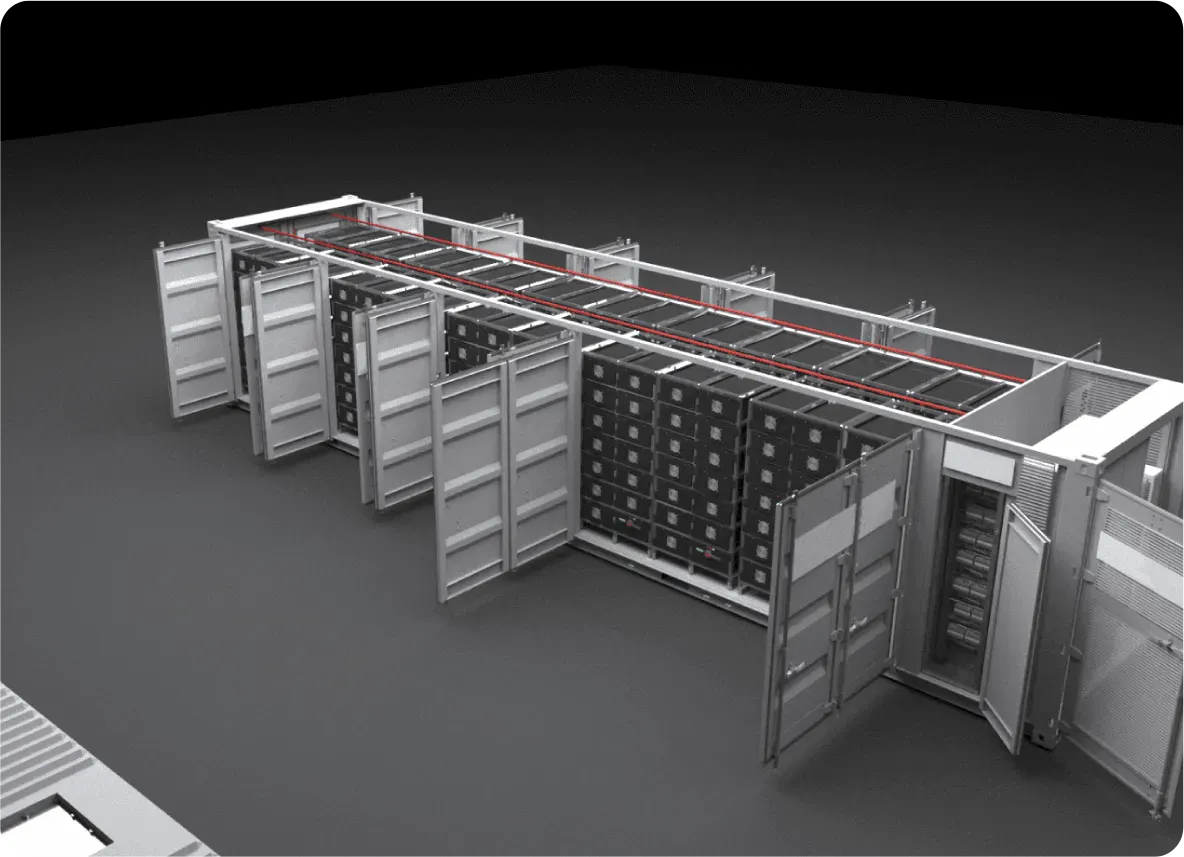
SCALING STORAGE PROFITABLY STARTSWITH CASCADINGHIGHVOLTAGE
As global demand for battery energy storage systems (BESS) accelerates, the industry is facing a critical challenge: how to scale massive storage deployments while keeping costs, efficiency losses, and operational complexity under control. Increasingly, the answer lies in cascading high-voltage architecture. Energy companies and storage manufacturers are turning toward higher-voltage system designs to improve efficiency, reduce infrastructure costs, and support the next generation of grid-scale energy storage projects. Why Voltage Matters in Energy Storage In battery systems, voltage directly affects how electricity is transmitted throughout the system. Higher voltage allows the same amount of power to move with lower current, which reduces: This becomes especially important as storage projects scale from megawatt-hours to gigawatt-hour deployments. Traditional lower-voltage systems can become increasingly inefficient and expensive at larger scales because they require more cabling, more conversion equipment, and more thermal management infrastructure. What “Cascading High Voltage” Means Cascading high-voltage architecture refers to connecting battery modules and power conversion systems in layered high-voltage configurations rather than relying on heavily centralized low-voltage aggregation. In practice, this means: The approach is gaining traction in utility-scale storage projects where efficiency gains of even a few percentage points can significantly improve long-term profitability. Lower Costs, Higher Efficiency One of the biggest advantages of high-voltage cascading systems is lower balance-of-system cost. By reducing current flow requirements, operators can use: That can substantially reduce both capital expenditure (CapEx) and operational expenditure (OpEx). According to industry analyses, higher-voltage architectures can also improve round-trip efficiency, helping storage operators maximize revenue from electricity trading, peak shaving, and renewable integration. (energy-storage.news) Designed for the Renewable Energy Era The rapid expansion of solar and wind generation is increasing the need for large-scale storage systems capable of stabilizing intermittent renewable power. Battery storage is increasingly being used for: As projects become larger and more complex, scalable high-voltage design is becoming a competitive advantage rather than a niche engineering choice. Companies such as CATL, Tesla, and BYD are all investing heavily in next-generation storage architectures optimized for higher energy density and utility-scale deployment. Safety and System Management Remain Critical Despite the advantages, higher-voltage systems also introduce new engineering and safety requirements. Operators must carefully manage: Advanced monitoring software and intelligent power management are becoming essential components of modern storage platforms. Industry experts say future profitability in battery storage will depend not only on battery chemistry, but also on system architecture and power electronics design. The Future of Energy Storage Is Bigger — and Higher Voltage Global energy storage deployment is expected to expand dramatically over the next decade as countries modernize power grids and accelerate renewable adoption. In that environment, profitability increasingly depends on scalability and efficiency. Cascading high-voltage systems are emerging as one of the key engineering strategies that could enable the next wave of large-scale, economically viable energy storage infrastructure.05/14/2026