


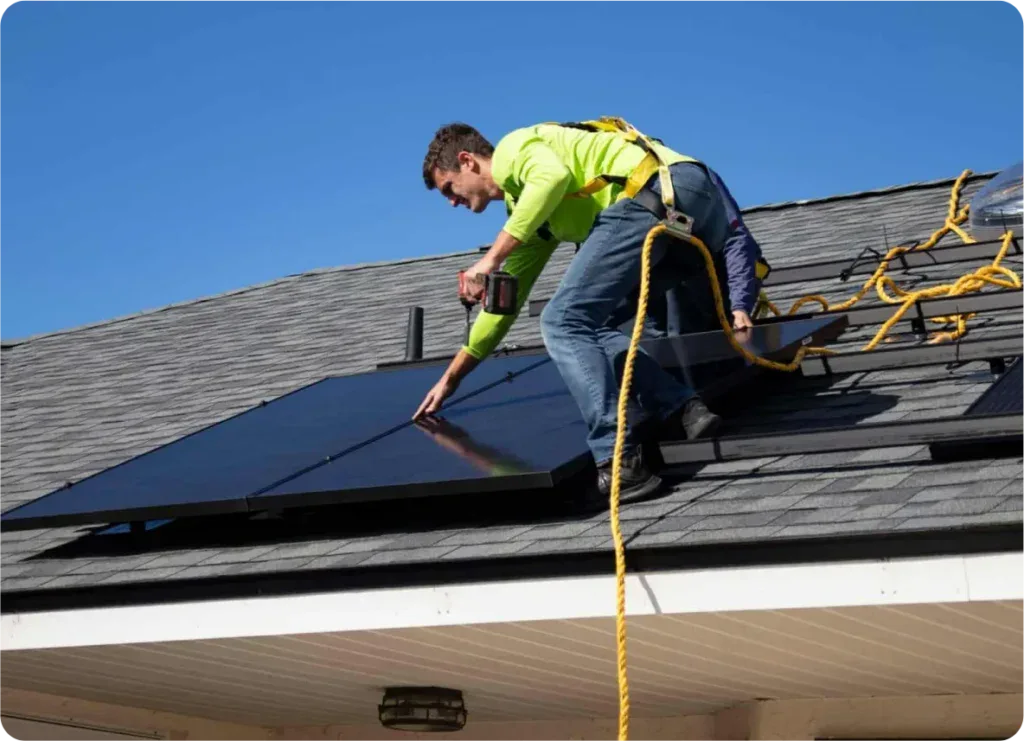
The UK government is moving toward one of its biggest housing-energy reforms in decades: making solar panels standard on most new-build homes.
Under the upcoming Future Homes Standard, the vast majority of new homes in England are expected to include rooftop solar panels, alongside low-carbon heating systems such as heat pumps. The policy is part of Britain’s broader push to reduce energy bills, cut emissions, and reduce dependence on fossil fuels.
Solar Panels Could Become Standard on New Homes
The government has confirmed that new rules tied to the Future Homes Standard will require most newly built homes to generate renewable electricity — and in most cases, that means solar panels.
Reports suggest developers may need to install rooftop solar covering around 40% of a building’s ground-floor area, although exceptions will exist for homes with unsuitable roofs or excessive shading.
The policy is expected to take effect from 2027 or 2028, depending on the final implementation schedule.
Why the UK Is Doing This
The government says the move is designed to:
- Lower household energy bills
- Improve national energy security
- Reduce carbon emissions
- Accelerate the transition away from gas heating
Energy Secretary Ed Miliband described the shift as part of the UK’s effort to achieve “energy sovereignty” through clean domestic power generation.
Officials estimate that future homes built under the new standard could save households up to £830 annually on energy costs compared with older housing standards.
A Big Change for UK Housing Developers
For builders, the new rules represent a major design and construction shift.
Developers will need to rethink:
- Roof layouts
- Building orientation
- Electrical infrastructure
- Heating systems
- Energy-efficiency standards
Industry groups have warned that the requirements could increase construction costs by several thousand pounds per home. Some estimates place the additional cost at roughly £10,000 when combining solar panels and heat pumps.
However, supporters argue that lower long-term energy bills will outweigh the upfront costs.
Britain Is Moving Toward Fully Electrified Homes
The solar-panel mandate is part of a much larger transition underway in the UK housing sector.
Future homes are increasingly expected to include:
- Heat pumps instead of gas boilers
- EV charging capability
- High-efficiency insulation
- Smart energy systems
- Rooftop solar generation
In effect, homes are being redesigned as small-scale energy hubs rather than purely energy-consuming buildings.
Even the UK Is Going All-In on Solar
One reason the policy has attracted international attention is simple: Britain is not exactly famous for sunny weather.
Yet solar power now contributes a growing share of UK electricity generation, reaching record output levels in 2026.
That reflects a broader reality across Europe:
Solar energy has become cheap enough that governments increasingly see it not just as climate policy, but as economic policy.
The UK’s upcoming housing rules may become a model that other countries eventually follow.